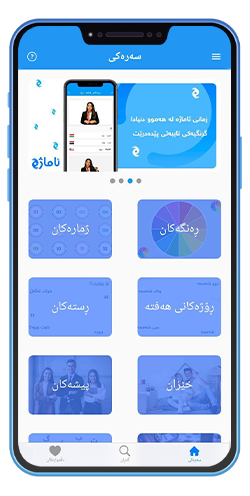
Language support
Learn with content that supports Kurdish sign language and makes meaning easier to understand visually.
Kurdish sign language learning
Amazha makes Kurdish academic sign language more accessible through clear visual lessons, helping people learn, communicate, and participate more fully in everyday life.

On your phone, open the Amazha Dictionary link and choose Add to Home Screen to keep it as a shortcut.
Read our Privacy PolicyAmazha is a Kurdish application designed to support Deaf people and anyone who wants to learn Kurdish academic sign language through images and videos.
Learn with content that supports Kurdish sign language and makes meaning easier to understand visually.
Keep lessons close at hand on Android and iOS, whether you are at home, at school, or on the move.
A simple visual interface keeps the focus on learning and helps users find what they need quickly.
Watch a quick introduction to the Amazha app and the experience it creates for sign language learners.
Practical features put visual learning, accessible content, and everyday communication in one simple experience.
A calm, intuitive experience helps users focus on learning instead of navigating.
Content is available in Kurdish varieties as well as Arabic and English.
Use your internet connection to access current lessons and learning content.
Amazha continues to grow with improvements and additional learning resources.
The app is available free of charge so more people can start learning.
Visual explanations make signs and phrases easier to study and remember.
Our team brings together technical expertise and Kurdish academic sign language knowledge.

Founder
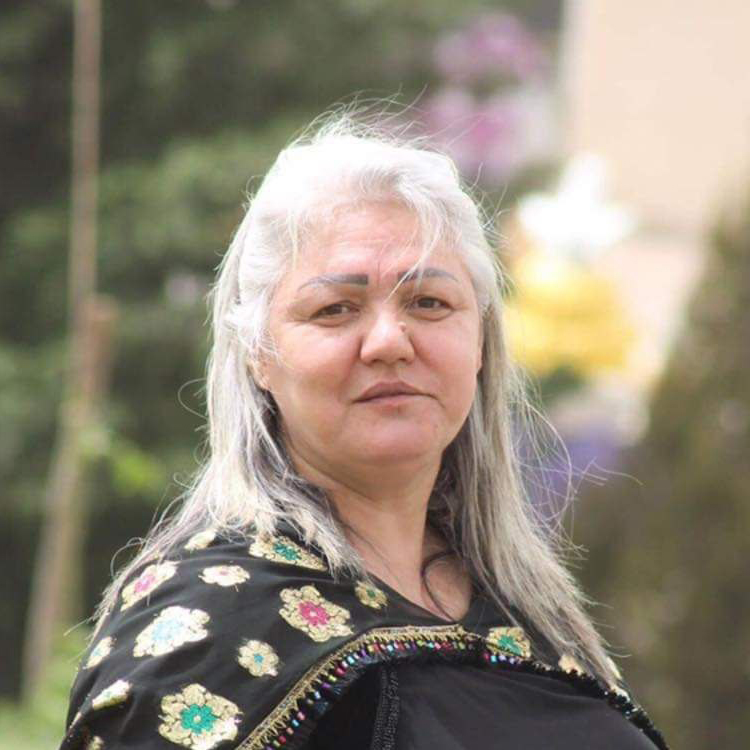
Kurdish sign language teacher

UI/UX designer

Co-founder

Actor

Full-stack developer
Every learner and supporter helps make communication more inclusive.
I was really impressed that there is a sign language application. I am very happy—thank you for your efforts. This is a great step.

I have benefited a lot from the application. When a Deaf patient came to me, I was able to speak with him in sign language.
I am happy to have this application because it helps me support people with disabilities in my everyday work.
Understand why sign language matters and how Amazha supports the first steps of learning.
Sign language supports communication, participation, and self-expression for Deaf and hard-of-hearing people. It also helps build a more inclusive community by making everyday interaction more accessible.
No. Sign languages are distinct languages with their own grammar, vocabulary, and cultural context. They vary across countries and can have regional variations within the same country.
Learning sign language can encourage inclusion, empathy, visual communication, and cultural awareness. It is a practical skill that can support communication in many situations.
Many people find the visual nature of sign language intuitive. Learners can begin with simple ideas and everyday signs, but fluency still needs practice, dedication, and exposure to the Deaf community.
No. Start with useful, everyday signs and build your knowledge over time. Learning signs relevant to your work or daily routine can make an immediate difference.
Promote inclusive communication, learn sign language, use visual information where possible, and listen respectfully to the preferences and experiences of Deaf people.
Send us a message with your questions, comments, or suggestions. We appreciate hearing from the community.
Download the app and take the next step toward learning Kurdish sign language.
Open the web app on a mobile browser, then choose Add to Home Screen to create a shortcut.